
The re-appointment of the vice-chancellor of Calcutta University, which was also challenged in the PIL, has already been set aside by the high court and upheld by the Supreme Court.

Bhimrao Ramji Ambedkar, the architect of the Indian Constitution, is also credited with the creation of the Election Commission of India. An amendment he brought to the Constituent Assembly led to the establishment of the Election Commission as an independent body responsible for conducting elections. Ambedkar's amendment consolidated election authority into a centralized body, headed by a chief election commissioner appointed by the President, rather than separate commissions for the Centre and states. This article delves into the historical context and the importance of Ambedkar's contribution in establishing the Election Commission of India.

Protests against the Waqf (Amendment) Act turned violent in Cachar district of Assam on Sunday, with protesters throwing stones at police and the police using batons to disperse the crowd. The incident occurred in Berenga area of Silchar town where around 300-400 people protested without permission. The Cachar district administration imposed prohibitory measures across the district under Section 163 of the Bharatiya Nagarik Suraksha Sanhita (BNSS) to prevent further unrest. The order prohibits gatherings of five or more people without permission, carrying weapons, organizing protests, and traffic disruptions.
The government has also listed three new bills for the session -- 'The Protection of Interests in Aircraft Objects Bill, 'Tribhuvan Sahkari University Bill', and the 'Immigration and Foreigners Bill'.

The Cabinet approved amendments to the companies law which doesn't require mandatory declaration.

Finance Minister Nirmala Sitharaman on Tuesday expressed anguish over not being allowed to learn Hindi in Tamil Nadu as a student and was even mocked on the streets for attempting to learn the language.

Lee Jae-myung's decisive victory in South Korea's snap presidential election marks a major political shift driven by public backlash against authoritarian, with significant implications for domestic reform and the future of the US-South Korea alliance, observes Dr Rajaram Panda.

Protesters in West Bengal's Murshidabad district set fire to police vehicles and hurled stones during a demonstration against the Waqf (Amendment) Act. The incident occurred on Tuesday afternoon in the Jangipur area, where a large crowd had gathered demanding the withdrawal of the legislation. Police responded with lathi charges and tear gas to control the situation. Several people were detained and police personnel were injured in the stone-pelting. The West Bengal Police has said the situation is under control and strict action will be taken against those who resorted to violence.

Default on repayments from March 25, the day when the nationwide lockdown began to curb coronavirus infections, would not be considered for initiating insolvency proceedings for at least six months.
'Modi's charisma may have weakened as last year's Lok Sabha poll results showed but in the eyes of the Sangh Parivar, it has not waned.' 'Minus a strong BJP government at the Centre for another decade and more, there is apprehension that an anti-Hindutva government could reverse many of the ideological gains that the Modi dispensation has achieved through its three terms,' points out N Sathiya Moorthy.

Several areas in Muslim-majority Murshidabad, including Suti, Dhulian, Jangipur and Shamsherganj, have witnessed violent protests against the Waqf (Amendment) Act that spiralled into communal violence, sparking the exodus.
Justice Bhushan Ramkrishna Gavai, India's 52nd chief justice and its first Buddhist one, has played a key role in shaping the judicial landscape, penning about 300 verdicts, including landmark rulings on constitutional issues, liberty, and perhaps most important against the executive's 'bulldozer justice'.

'So, they have taken away the word Waqf from the Bill.' 'It will now be known as the UMEED Act.'

The Congress has promised to review and amend a host of laws, rules and regulations.

India's bid to host the 2036 Olympics is not merely an attempt to make a statement internationally but also a well thought out plan to create world-class infrastructure, said Minister of State for Sports Raksha Khadse.
The Karnataka government has tabled a Bill in the Legislative Assembly to introduce a 4 per cent reservation for Muslims in public contracts. The Bill aims to address unemployment among backward classes and promote their participation in government construction projects. The BJP has called the move an "unconstitutional misadventure" and vowed to oppose it.

The panel headed by Justice (retired) Ritu Raj Awasthi has submitted its report to the government, calling for an exhaustive overhaul of the law.

The revamped Special Economic Zone (SEZ) law is unlikely to see the light of the day before the upcoming Lok Sabha elections, two people aware of the matter said. The commerce department had sought the Union Cabinet's nod to bring amendments to the existing SEZ Act, 2005 late last year. The plan, thereafter, was to introduce the Bill in the winter session of Parliament. Cabinet's approval remains pending.
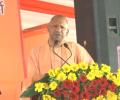
Uttar Pradesh Chief Minister Yogi Adityanath launched a scathing attack on West Bengal Chief Minister Mamata Banerjee over the violence during protests against the Waqf law, accusing her of remaining silent while "Bengal is burning." He also said that the only treatment for rioters is stick, as "Those who respond only to thrashing don't understand words."

At least six students have been injured in the incident and they are currently undergoing treatment at the government hospital Hisar, the sources said.
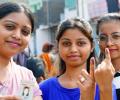
Based on the recommendation of the Election Commission (EC), the Union law ministry on Friday amended Rule 93(2)(a) of the Conduct of Election Rules, 1961, to restrict the type of "papers" or documents open to public inspection.

Dismissing allegations that Indian phacosrmaceutical companies copy products of Swiss firms, Commerce and Industry Minister Piyush Goyal on Tuesday said it is a long-standing myth and India respects intellectual property rights and never steals technology from others. He said that Swiss pharmaceutical companies have not shown even a single instance that Indian companies have illegally copied any of their trademarks or patents or copyrighted technology.

Re-entry into the list could have far-reaching consequences for Pakistan, including diminished foreign investment, increased borrowing costs, and tighter scrutiny from global financial institutions.

The Supreme Court on Thursday upheld the constitutional validity of Section 6A of the Citizenship Act related to the grant of Indian citizenship to illegal immigrants in Assam by a majority verdict of 4:1.

India's doping woes came to the fore once again with the country topping the World Anti-Doping Agency's 2023 testing figures among countries which analysed 5,000 or more samples even as the sports ministry promised an "aggressive clean-up" and an amended Anti-Doping Act after addressing objections from the WADA.
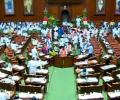
The Karnataka Legislative Assembly passed a Bill providing 4% reservation for Muslims in public contracts, sparking protests from the opposition BJP. The Bill, which amends the Karnataka Transparency in Public Procurements (KTPP) Act, aims to increase Muslim participation in government contracts valued up to Rs 2 crore for civil works and Rs 1 crore for goods and services. The BJP criticized the move as unconstitutional and vowed to challenge it in court.
The Islamabad high court is set to hear the petitions requesting the suspension of sentences to Khan and his wife Bushra Bibi in the 190 million Pound Al-Qadir Trust case on June 11.

The bill to create a separate Telangana does not require a constitutional amendment and the new state can be carved out by a simple majority in Parliament.

'The BJP lacks a credible mass leader who matches Mamata Banerjee's popularity.' 'Given the division of votes among Opposition parties, the West Bengal government's dole-giving strategy, and the consolidation of the poor, significant sections of scheduled caste groups and Muslim minorities behind the ruling party, it will be difficult to dislodge the Trinamool from power.'

The Supreme Court of India has ruled that maternity leave is a fundamental right and cannot be denied to a woman based on the number of children she has from previous relationships. The court overturned a Madras High Court decision that had denied maternity leave to a Tamil Nadu government school teacher who had two children from a previous marriage. The Supreme Court emphasized the importance of reproductive rights, including maternity benefits, as part of international human rights law. The court also highlighted the right to life under Article 21 of the Indian Constitution, which includes the right to health, dignity, and reproductive choice. The decision has significant implications for women's rights and reproductive healthcare in India.

The Supreme Court expressed its disapproval of an analogy used by the Centre in support of the inclusion of non-Muslims in Waqf boards, stating that such logic would disqualify a bench of Hindu judges from hearing matters related to Waqf. The CJI questioned the Centre's stance on the provisions of the Waqf (Amendment) Act, 2025, which allows non-Muslim members in the Central Waqf Council and state waqf boards. The Solicitor General defended the provisions, emphasizing that the non-Muslim inclusion is limited and does not impact the Muslim composition of these bodies. However, the CJI asserted that judges shed their religious affiliations while serving on the bench and maintained their secularity in their judicial capacity.

The accused, Raja Rahuvanshi's wife, Sonam Raghuvanshi, Raj Singh Kushwaha, Akash Rajput, Vishal Singh Chauhan and Anand, were then brought back to the Shillong Sadar Police Station.

Should the anti-defection law in India exist only to prevent democratically elected governments from being toppled?

The government on Monday ruled out amending abortion laws in consideration of cases like that of Niketa Mehta, who wanted to terminate her 26-week pregnancy as the child would be born with a congenital heart defect."As it is today, going by just one case, I do not think the law can be amended," Union Health Minister Anbumani Ramadoss said."We sympathise with her case and would discuss all other avenues," he said.

A Supreme Court lawyer has written to the Attorney General seeking consent to initiate contempt proceedings against BJP MP Nishikant Dubey for his "grossly scandalous" remarks against the court. Dubey had criticized the Supreme Court and Chief Justice of India Sanjiv Khanna following the Centre's assurance that it would not implement some of the contentious provisions of the Waqf (Amendment) Act. The BJP has distanced itself from Dubey's comments, calling them his personal views.

The Supreme Court of India has censured BJP MP Nishikant Dubey for his remarks against the judiciary, stating that his comments "tend to scandalize and lower the authority of the Supreme Court of India." The court dismissed a contempt petition against Dubey but issued a scathing order criticizing his remarks, which included accusations that the court was "taking the country towards anarchy" and that Chief Justice Sanjiv Khanna was "responsible for the civil wars taking place in the country." The court deemed Dubey's statements "highly irresponsible" and indicative of an attempt to "incite religious wars." The order highlighted the importance of maintaining public confidence in the judiciary and condemned attempts to undermine its authority.

'By extending the definition of 'personal' to include institutions and not just individuals, the State has equipped itself with a tool to block access to most kinds of information.'
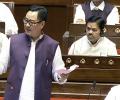
'It is not as if Hindus are not being touched at all, and only Muslims are.'
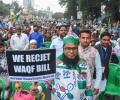
Seeking to allay fears that existing Waqf properties will be subject to scrutiny after the amended Waqf law comes into force, a parliamentary panel on Tuesday recommended that no cases will be reopened against such properties on a retrospective basis, provided the asset is not in dispute or belongs to the government.

'If it is not reversed, it will set a dangerous precedent.'
